Trivechain / TriveAsset / Protocol engineering
An asset is a record. Ownership is a rule.
Tokenization, wallets and migration on a public UTXO chain. A case in what a ledger stores—and what an application must interpret.
- My role
- Blockchain developer → Development lead
- Period
- 2018–2021
- Evidence available
- Source code + archived transaction + technical field notes
01 / Context
The problem
Represent transferable assets and certificates on an existing UTXO blockchain, while making their ownership readable in wallets and an explorer.
My contribution, and the team's
I joined after the chain launched. My account covers building the mining pool, reworking the explorer, updating the wallet for TriveAsset and leading development. The repositories include upstream and team contributions; they are not a claim of sole authorship.
Constraints
The base chain processed ordinary transactions. Asset meaning depended on software interpreting those transactions consistently. Small data payloads, funded ownership outputs and transaction fees constrained the design.
02 / Decision
The consequential choice
TriveAsset placed ownership in a spendable output and asset instructions in transaction data. A wallet or indexer replayed those records to reconstruct asset state. This reused the chain's transaction model, at the cost of relying on interpretation outside base consensus. It was not an account-based token contract with a native balance table.
- 01Transaction
Spendable output + asset payload
- 02Chain record
Ordinary transaction validation
- 03Wallet / indexer
Interpret events to reconstruct ownership
03 / Delivery
What shipped
- TriveAsset encoding/decoding protocol and SDK
- Wallet and block-explorer integration
- TriveCredential certificates, documented in the 2019 product update
- 2021 wallet-migration tooling and BSC token-contract source
The documented outcome
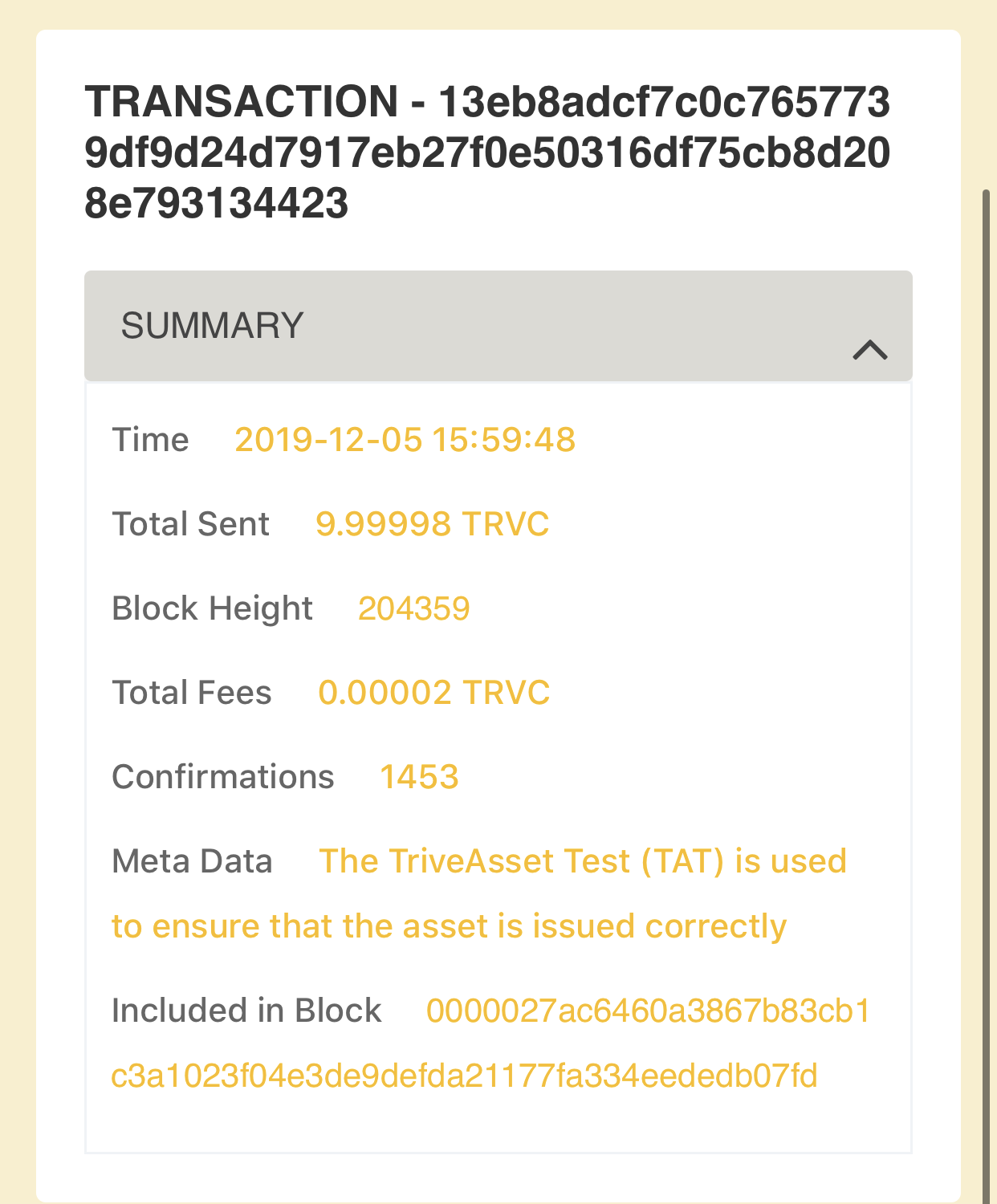
The archived transaction shows a TriveAsset test issuance. TriveCredential subsequently applied the asset layer to certificates. The source record also preserves the migration tooling from the original chain to BNB Chain in 2021.
Limits of the record
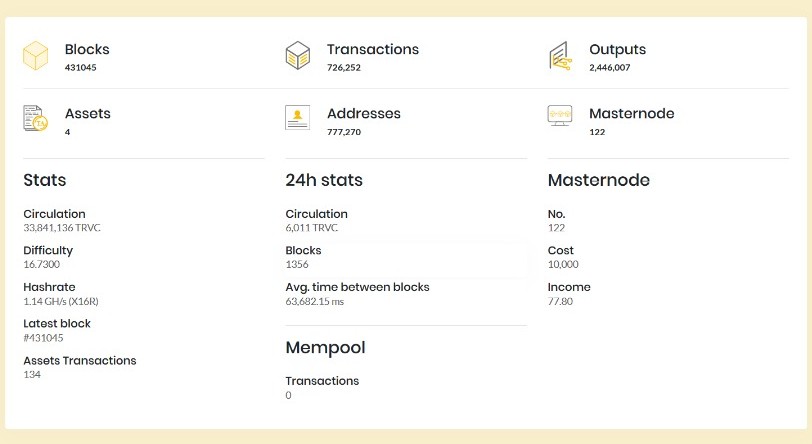
The original network was wound down. Screenshots document historical operation; they are not a live verification service. The public migration tools do not establish that every holder completed migration, and no completion-rate claim is made here. A chain record also cannot establish the truth of the document it contains.
04 / Evidence
Inspect the record
Continue the thread